Control of population spiking activity in prefrontal cortex using microstimulation
Sep
14
2026
Sep
14
2026
Description
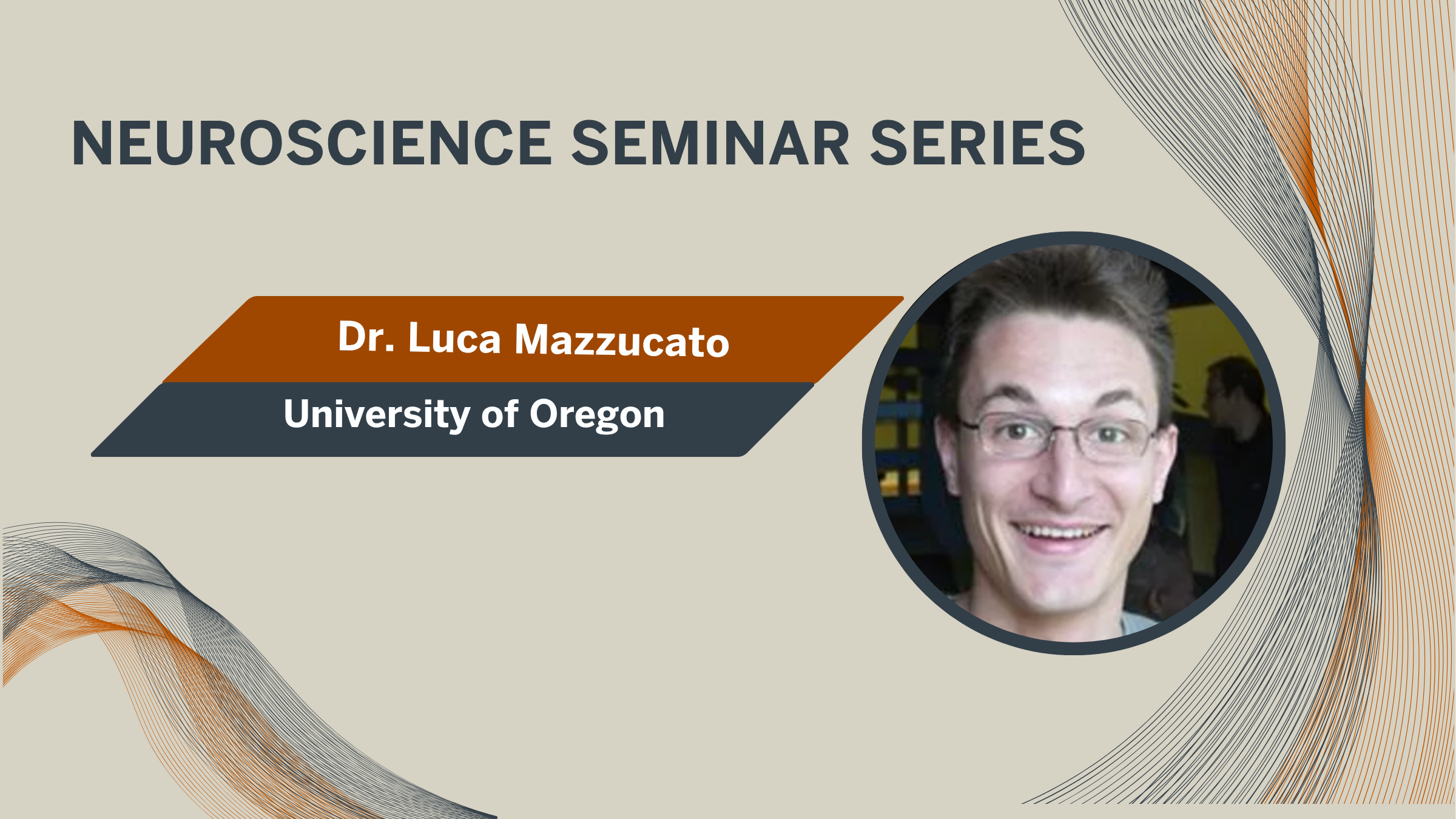
Dr. Luca Mazzucato is an associate professor of Biology, Mathematics and Physics at the University of Oregon.
Closed-loop control of cortical activity is a central goal in systems neuroscience and clinical neuromodulation, but most approaches either rely on detailed circuit models that are unattainable in vivo or on open-loop stimulation tuned by trial and error. Here we introduce REACHable manifold Control (REACH-Ctrl), a data-driven brain–computer interface that achieves real-time control of population spiking activity using patterned microstimulation and multi-electrode recordings. REACH-Ctrl learns a finite-horizon controllability map directly from short training epochs in which random multi-electrode pulse sequences are delivered through a subset of electrodes while recording evoked responses. From these input-output data, it identifies the “reachable manifold” of population states and computes low-current microstimulation sequences that steer activity toward designated targets, without explicit knowledge of the underlying connectivity or dynamics. We validate REACH-Ctrl in recurrent network models and test it in macaque prefrontal cortex, demonstrating high control accuracy, robust across sessions and stimulation parameters. Geometric analyses showed that multi-pulse sequences traverse a well-defined reachable manifold with substantial, but incomplete, overlap with the intrinsic neural activity manifold, revealing both on- and off-manifold components of control. Encoding models further revealed that, in our weak-stimulation regime, population responses to multi-electrode sequences are well approximated by the linear sum of localized “stimulation fields” explaining the success of our linear control approach. These results demonstrate precise, sample-efficient control of cortical population activity with clinically relevant microstimulation hardware, and provide a general blueprint for designing perturbations for sparsely observed neural circuits.
Hosted by Dr. Thibaud Taillefumier
To subscribe to our Seminars Series mailing list, please visit https://utlists.utexas.edu/sympa/info/neu-seminars and click on "Subscribe" in the left-hand column.
Please contact Neuro.Seminar.Series@austin.utexas.edu with any questions.
Other Events in This Series
Oct
11
2024
A single neuron is a complex adaptive system
Center for Learning & Memory Seminar Series
3:00 pm – 4:00 pm
Speaker(s): Rishikesh Narayanan - Indian Institute of Science
Nov
4
2024
Determining native-like membrane protein structures from cell membrane-derived vesicles.
2024-25 Neuroscience Seminar Series
3:00 pm – 4:00 pm
Speaker(s): Chen Zhao - University of Florida
Dec
9
2024
Large Pore Connexin Hemichannels: Channels or Transporters?
2024-25 Neuroscience Seminar Series
3:00 pm – 4:00 pm
Speaker(s): Jorge E. Contreras - UC Davis
Jan
13
2025
Role of the brain mesolimbic pathway in pain-induced anhedonia and opioid seeking.
2024-25 Neuroscience Seminar Series
3:00 pm – 4:00 pm
Speaker(s): Jose Moron-Concepcion - Washington University
Jan
27
2025
Alcohol induced memory deficits: State-dependent learning in C. elegans
2024-25 Neuroscience Seminar Series
3:00 pm – 4:00 pm
Speaker(s): Jill Bettinger - Virginia Commonwealth University
Feb
10
2025
It's all how you look at it: Construal is reflected in brain and behavior
2024-25 Neuroscience Seminar Series
3:00 pm – 4:00 pm
Speaker(s): Peter Balsam - Columbia University
Feb
17
2025
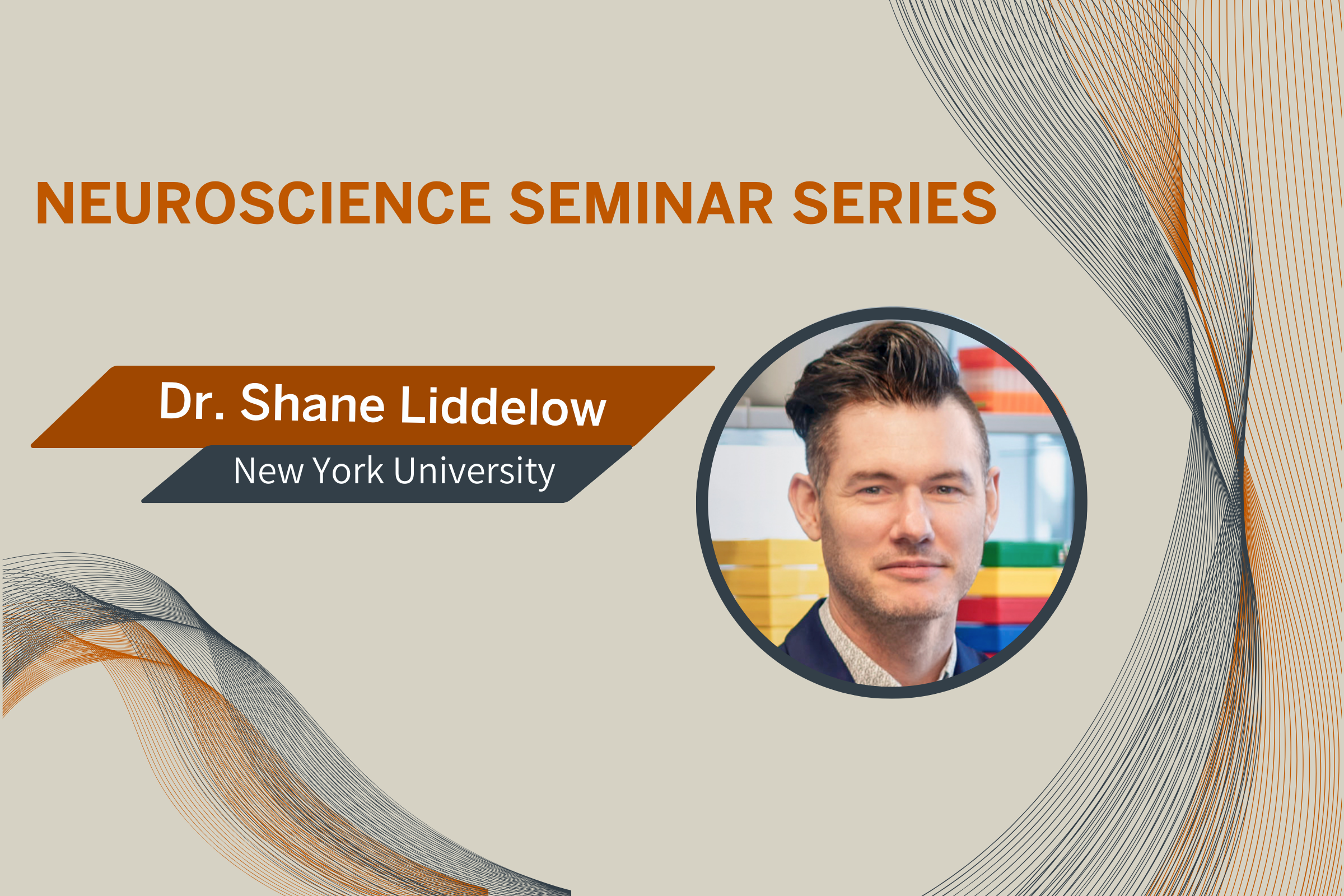
Are astrocytes the key to understanding neurodegenerative disease?
2024-25 Neuroscience Seminar Series
3:00 pm – 4:00 pm
Speaker(s): Shane Liddelow - New York University
Mar
24
2025
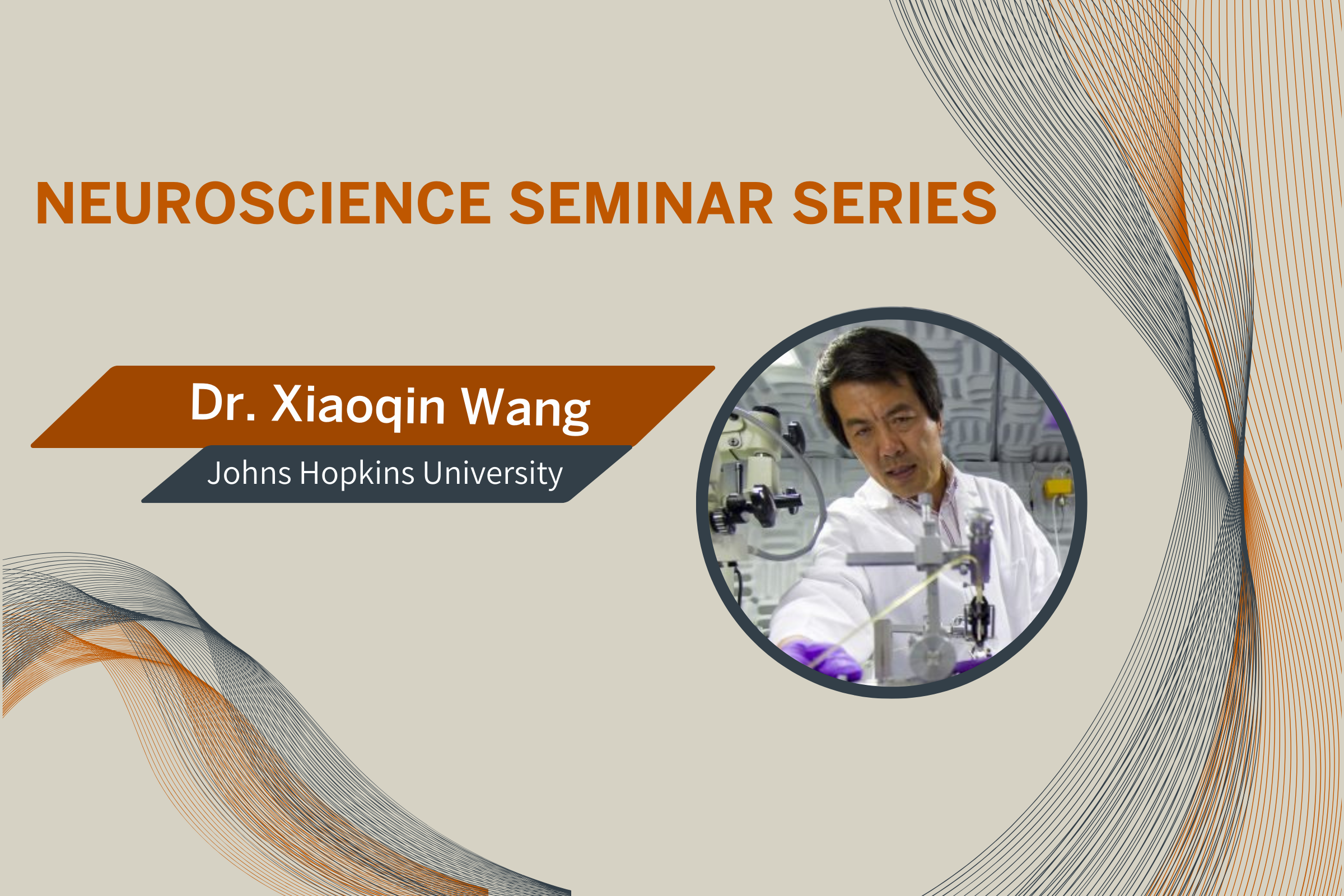
Computational Principles of Primate Auditory Cortex
2024-25 Neuroscience Seminar Series
3:00 pm – 4:00 pm
Speaker(s): Xiaoqin Wang - Johns Hopkins University
Mar
31
2025
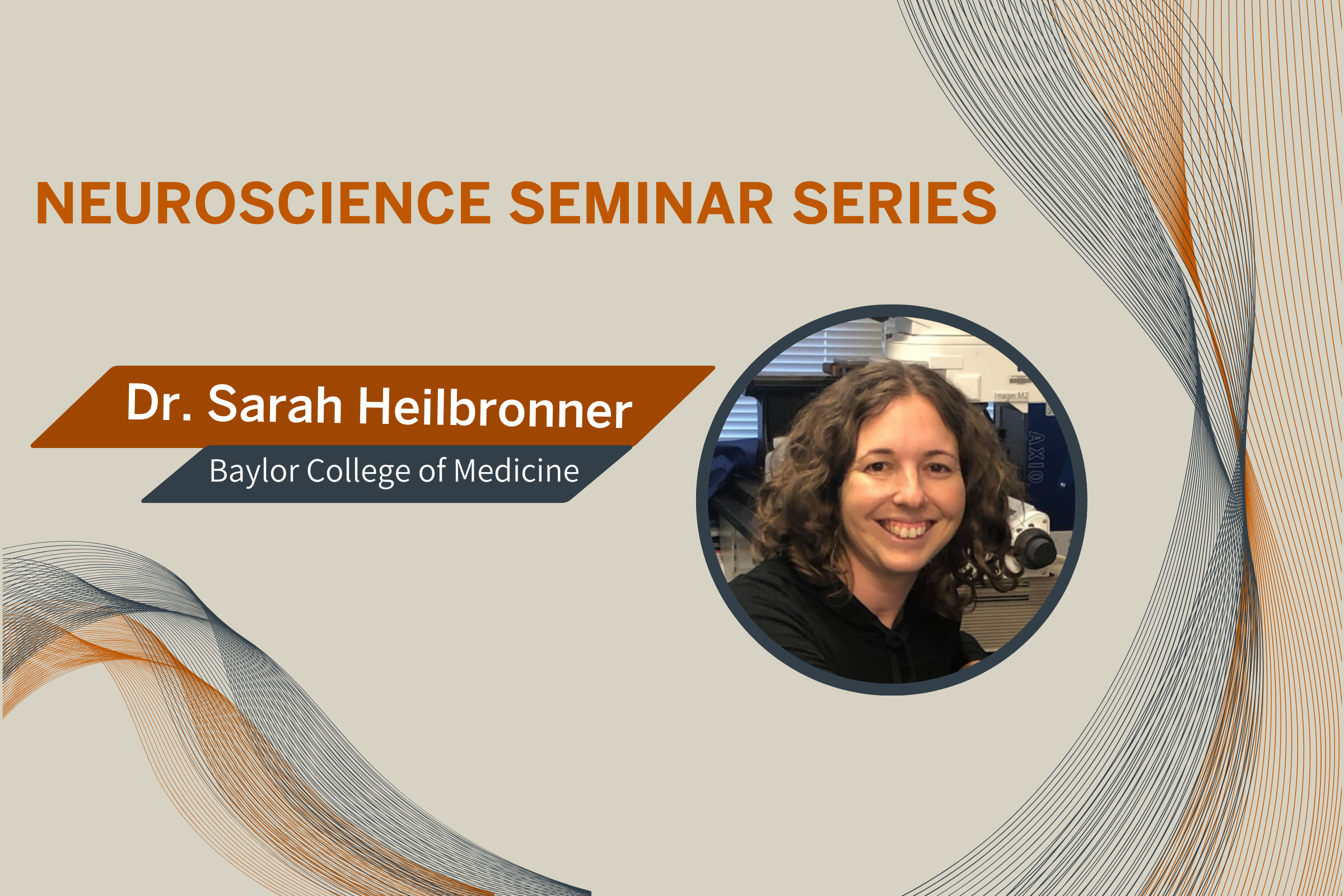
Mapping and modulating human brain connections
2024-25 Neuroscience Seminar Series
3:00 pm – 4:00 pm
Speaker(s): Sarah Heilbronner - Baylor College of Medicine
Apr
14
2025
Mechanisms of chronic pain: lessons from studies of human DRG and spinal cord
2024-25 Neuroscience Seminar Series
3:00 pm – 4:00 pm
Speaker(s): Ted Price - UT Dallas