Investigating the Neuronal and Network-Level Mechanisms Underlying Alzheimer’s Disease
Apr
20
2026
Apr
20
2026
Description
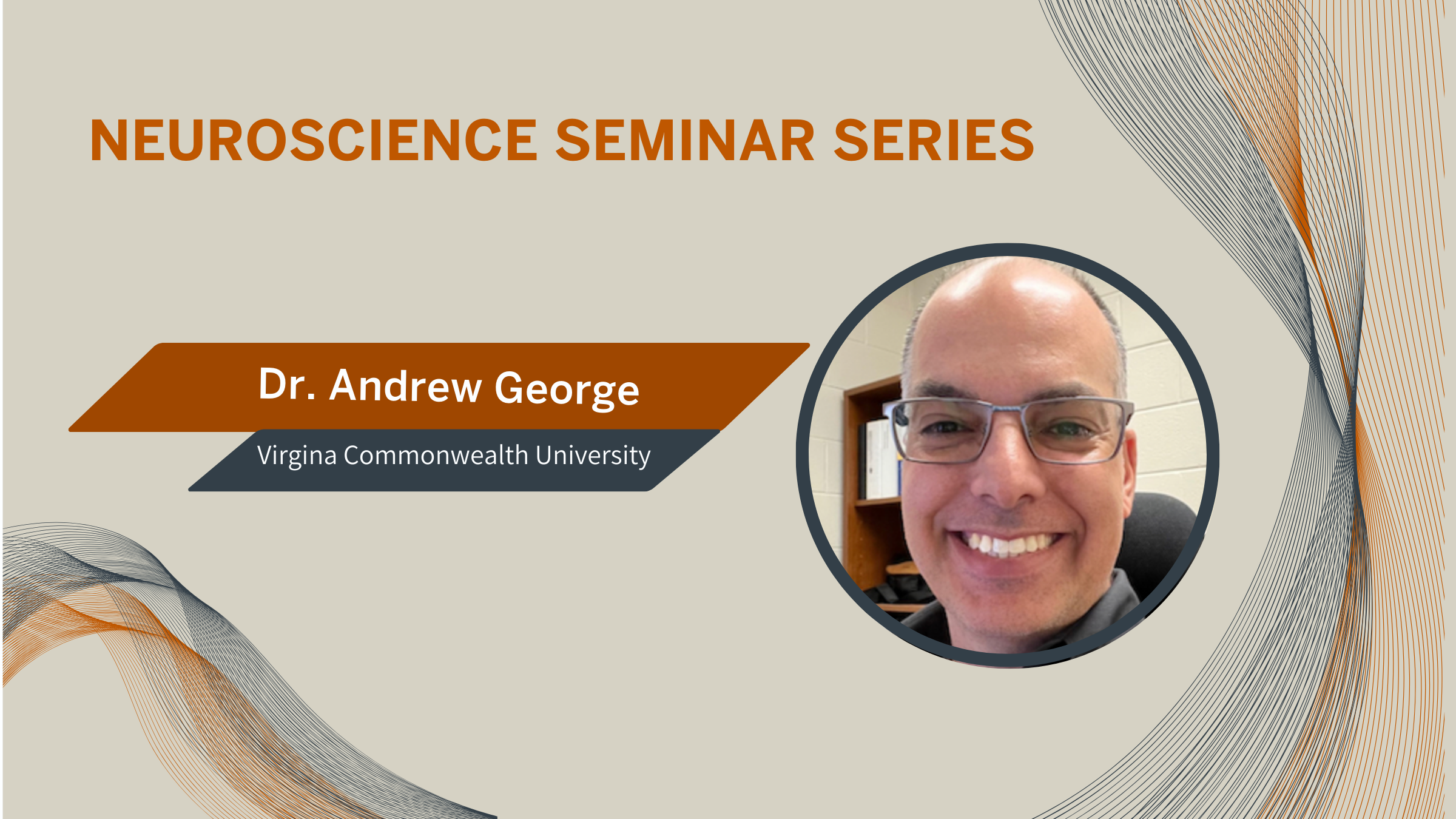
Dr. Andrew George is an assistant professor of Pharmacology and Toxicology at the Virginia Commonwealth University.
Alzheimer’s disease (AD) is a neurodegenerative condition that progressively destroys memory and cognition, exacting devastating personal and public health costs. Recent evidence indicates that soluble oligomeric Aβ42 (oAβ42) begins accumulating in the human brain one to two decades before clinical symptoms of AD emerge. Multiple studies suggest that elevated levels of soluble oAβ42, rather than insoluble Aβ plaques, drive the selective degeneration of vulnerable neurons and serve as the strongest predictors of cognitive decline in AD. Basal forebrain cholinergic neurons (BFCNs) are particularly vulnerable to functional modulation by oAβ42, and their dysfunction has been implicated in memory loss and cognitive impairment. In septo-hippocampal pathways, α7-containing nicotinic acetylcholine receptors mediate synaptic transmission and neuronal intrinsic excitability. While most α7 nicotinic acetylcholine receptors (nAChRs) are homomeric, α7β2-containing nAChRs are preferentially expressed on BFCNs. Using single-channel electrophysiology, we show that oAβ42 activates both α7- and α7β2- nAChR subtypes, with a preferential enhancement of α7β2-nAChR single-channel open dwell times. In parallel, current-clamp recordings from BFCNs in organotypic slice cultures prepared from male and female ChAT-EGFP mice demonstrate that chronic exposure to pathophysiologically relevant levels of oAβ42 enhances BFCN intrinsic excitability. These effects are associated with reduced afterhyperpolarization and altered rates of membrane depolarization and repolarization. Mechanistically, we find that oAβ42-α7β2 nAChR interactions enhance BFCN excitability through modulation of BK-, SK-, and KCNQ/Kv7 (M-type) potassium channels. Together, these findings identify α7β2-nAChRs and downstream potassium channel targets as potential therapeutic targets for preventing BFCN dysfunction and cognitive decline in AD.
Hosted by Dr. Harold Zakon
To subscribe to our Seminars Series mailing list, please visit https://utlists.utexas.edu/sympa/info/neu-seminars and click on "Subscribe" in the left-hand column.
Please contact Neuro.Seminar.Series@austin.utexas.edu with any questions.
Other Events in This Series
Jan
26
2026
A Neural Circuit for Economic Decisions
2025-26 Neuroscience Seminar Series
3:00 pm – 4:00 pm
Speaker(s): Camillo Padoa-Schioppa - Washington University in St. Louis
Feb
2
2026
Synaptic Signaling in Memory and Chronic Pain-Related Disorders
2025-26 Neuroscience Seminar Series
3:00 pm – 4:00 pm
Speaker(s): Kimberly Tolias - Baylor College of Medicine
Feb
9
2026
Membrane curvature-regulated intracellular signaling
2025-26 Neuroscience Seminar Series
3:00 pm – 4:00 pm
Speaker(s): Bianxiao Cui - Stanford University
Feb
16
2026
Credit assignment through critical period plasticity
2025-26 Neuroscience Seminar Series
3:00 pm – 4:00 pm
Speaker(s): David Ehrlich - University of Wisconsin-Madison
Mar
9
2026
The curious case of dopaminergic error signals and learning beyond value….
2025-26 Neuroscience Seminar Series
3:00 pm – 4:00 pm
Speaker(s): Geoffrey Schoenbaum - NIH
Mar
30
2026
Hypothalamic Supramammillary Glutamatergic Circuits Linking Salience to Mesolimbic Dopamine and Reinforcement
2025-26 Neuroscience Seminar Series
3:00 pm – 4:00 pm
Speaker(s): Satoshi Ikemoto - NIH
Apr
13
2026
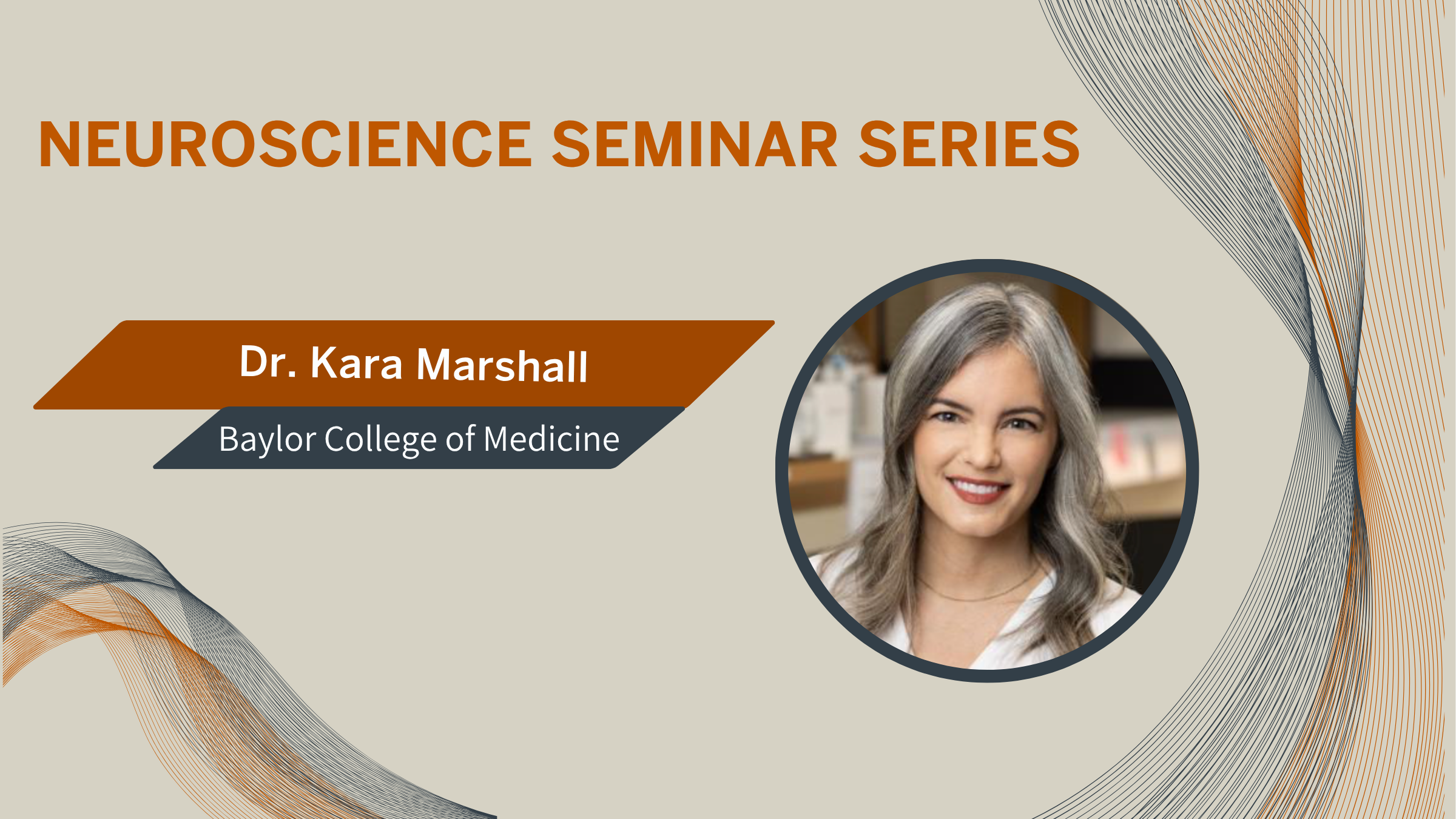
Feeling the force: PIEZO ion channels in interoception
2025-26 Neuroscience Seminar Series
3:00 pm – 4:00 pm
Speaker(s): Kara Marshall - Baylor College of Medicine
Apr
27
2026
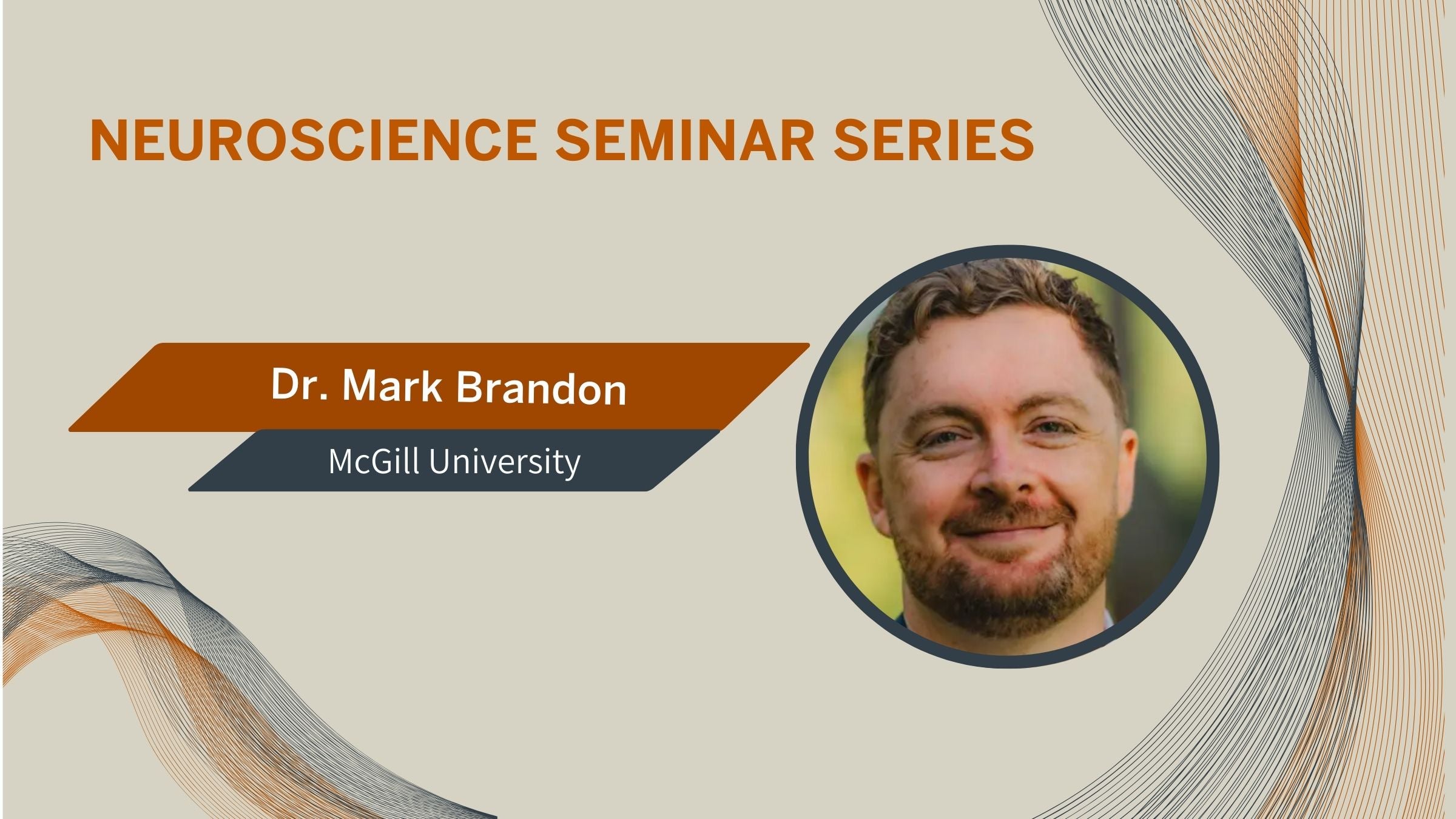
Neural Mechanisms of Spatial Orientation
2025-26 Neuroscience Seminar Series
3:00 pm – 4:00 pm
Speaker(s): Mark Brandon - McGill University
Aug
31
2026
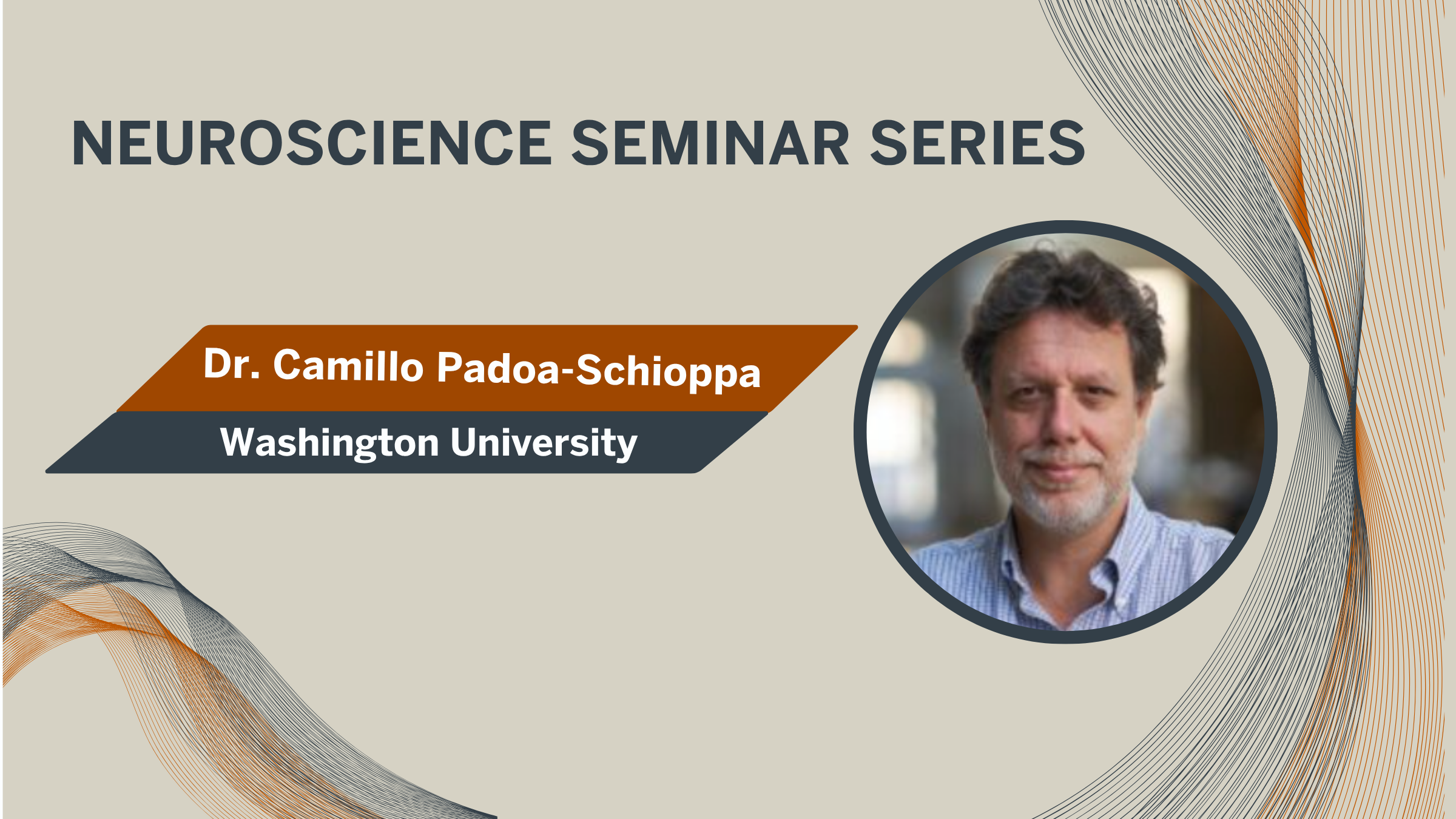
A Neural Circuit for Economic Decisions
2026-27 Neuroscience Seminar Series
3:00 pm – 4:00 pm • In Person
Speaker(s): Camillo Padoa-Schioppa - Washington University in St. Louis
Sep
14
2026
Control of population spiking activity in prefrontal cortex using microstimulation
2026-27 Neuroscience Seminar Series
3:00 pm – 4:00 pm • In Person
Speaker(s): Luca Mazzucato - University of Oregon